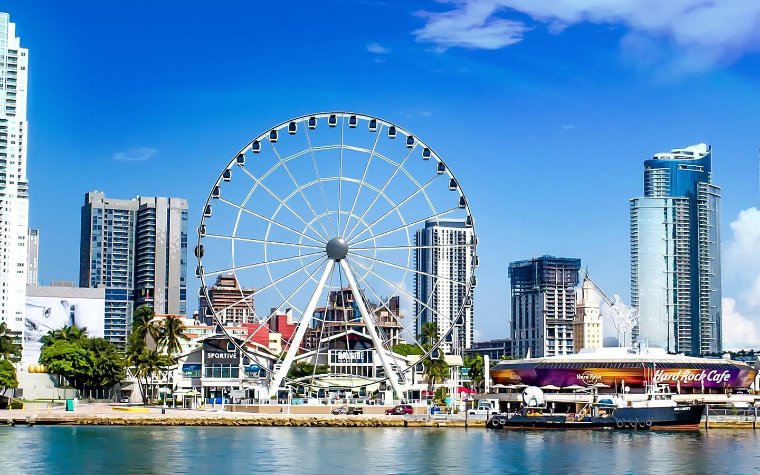
I get this question more than any other from people reaching out about buying in Miami. Both neighborhoods are on the water, both have serious high-rise development, both have seen dramatic price appreciation, and both are attracting residents from New York, California, and South America in roughly equal numbers. But they’re genuinely different places to live — and the buyer who is right for one is not always right for the other.
The Case for Brickell
Brickell is Miami’s financial district. That label might conjure images of stale corporate landscapes — Brickell is anything but. The neighborhood has the density of a real city: Brickell City Centre puts high-end retail walkable from most towers, the restaurant concentration on Brickell Avenue and Mary Brickell Village is excellent, the nightlife is active seven nights a week, and the Metromover system connects the neighborhood to downtown Miami and the courthouse area without requiring a car.
The employment story is Brickell’s biggest tailwind. 830 Brickell brought Citadel, Microsoft, Thoma Bravo, and a dozen other serious firms to the neighborhood. Blackstone has a significant presence. Apollo, KKR, and others have relocated or expanded South Florida offices to Brickell. This means high-earning tenants and buyers, sustained demand, and a neighborhood that functions like a real business district rather than just a residential tower cluster.
Price point: median asking prices for condos in Brickell are currently running $750K–$900K for a one-bedroom, $1.1M–$1.5M for two-bedrooms, with significant premium for new construction and bay-facing units. These are New York prices without the New York taxes.
The Case for Edgewater
Edgewater is where I live, so I’ll try to keep the bias in check. The neighborhood runs along Biscayne Bay from about NE 14th Street to NE 29th Street, sitting between Wynwood to the west and the bay to the east. It’s overwhelmingly residential — no financial district, no office towers, no major retail corridors. What it has is direct bay access, lower density than Brickell (for now), and proximity to both Wynwood’s creative scene and the Design District’s luxury shopping.
The Edgewater condo stock skews newer — most of the significant buildings were built after 2010. Paraiso District, Elysee, Biscayne Beach, and 1000 Museum (technically Park West but functionally Edgewater-adjacent) represent the high end. The neighborhood has some of the best bay views in the city, particularly from the north-facing units that look across toward Miami Beach and South Beach.
Price point: Edgewater currently runs somewhat below Brickell on a per-square-foot basis — roughly $650K–$800K for a one-bedroom, $900K–$1.3M for two-bedrooms — which represents better value by the numbers but also reflects the less walkable amenity set.
The Head-to-Head Comparison
Walkability: Brickell wins. The Brickell City Centre complex and Mary Brickell Village create a walkable urban node that Edgewater currently lacks. Edgewater is improving — the Whole Foods that opened on Biscayne and the restaurant density increasing around the Wynwood border help — but you’ll still use a car or rideshare more in Edgewater than in Brickell.
Nightlife: Brickell is for people who want to go out. The bars and clubs on Brickell Avenue and in the Brickell City Centre area are active and loud and fun. Edgewater residents going out typically head to Wynwood or Midtown rather than staying in neighborhood.
Bay views: This is where Edgewater wins. The bay in Edgewater is broader, the views across to Miami Beach more dramatic, and the bayfront park system (Margaret Pace Park) is excellent. Brickell has the river and some bay access, but the view corridors in Edgewater are generally better.
Investment: Both neighborhoods have appreciated strongly. If I had to bet on the next five years: Brickell’s employment story gives it more durable demand. Edgewater’s relative undervaluation versus the bay access and Wynwood proximity suggests more room to run. I’d pick Brickell for rental investment, Edgewater for personal use.
Who Should Buy Where
Buy in Brickell if: you work in finance, law, or tech and want walkable proximity to your office; you want active neighborhood amenities and don’t mind urban density and noise; you prioritize walkability and transit access; you’re primarily an investor and want tenants with high incomes and low vacancy.
Buy in Edgewater if: you work remotely or commute by car and don’t need to be near an office hub; you want bay views and bayfront park access; you’re drawn to the Wynwood and Design District cultural scene; you want slightly better price-per-square-foot for comparable quality; you’re planning to use the unit as a primary residence rather than primarily as a rental investment.